The Ray Announces Regional Strategy to Support National Expansion
The Ray has officially implemented a new regional staff strategy to accelerate the deployment of net-zero transportation infrastructure across the United States. By establishing dedicated teams across four regions—Northeast, Southeast, Midwest, and West—The Ray aims to streamline planning and procurement processes for its 51+ partner transportation agencies. This expansion is supported by a $250,000 grant from The Arthur M. Blank Family Foundation.
This strategic shift moves beyond a centralized model, allowing The Ray to provide more direct technical assistance, procurement support, and technology transfer. By distributing expertise geographically, the organization can better facilitate multi-state collaborations and respond to the urgent national demand for smarter, safer, and more sustainable infrastructure.
Key Components of the National Expansion:
Regional Specialization: Four dedicated regional offices will work to reduce project delivery timelines and provide localized support to state and local agencies.
GIS Integration: Led by new GIS Manager Dr. Jessie Hong-Dwyer, the regional teams will utilize advanced Esri mapping tools to identify and recommend optimal sites for renewable energy and connectivity projects within highway rights-of-way.
Comprehensive Agency Support: The Ray provides a full suite of services, including technology transfer, policy analysis, private sector networking, and public awareness campaigns to help agencies "go faster" on net-zero initiatives.
Proven Impact: Building on nearly a decade of experience, the strategy scales successful concepts—such as roadside solar, smart highway systems, and rubber-modified asphalt—that were first proven on The Ray Highway in Georgia.
“Across the country, state agencies and communities alike have an urgency for infrastructure that we can help them build, projects such as roadside solar; smart highway systems that are safer and less congested; longer-lasting, quieter roads paved with scrap tire rubber, and using empty transportation ‘right-of-way’ for expanding and securing the energy grid.”
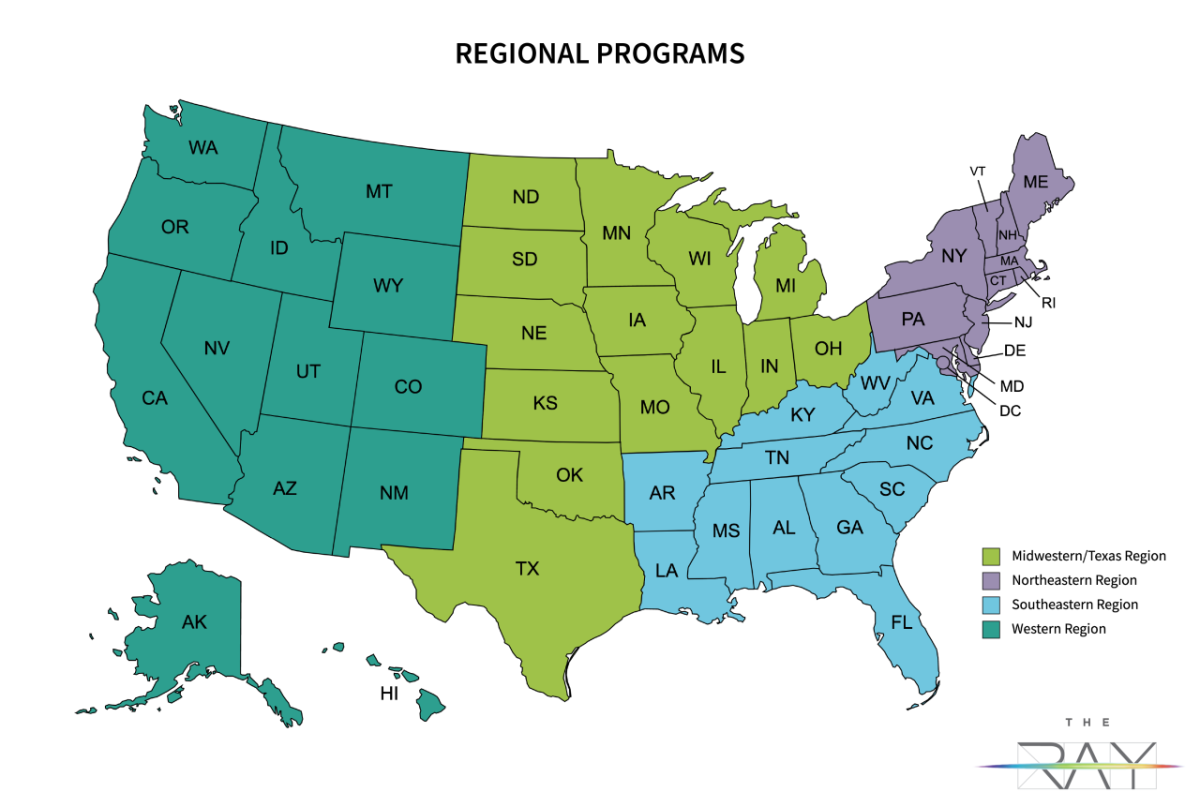
With this regional structure now in place, The Ray is positioned to turn its living lab successes into a national standard, helping communities across the country achieve a more regenerative and carbon-neutral transportation future.